Finding and reading service manuals and schematics for vintage audio
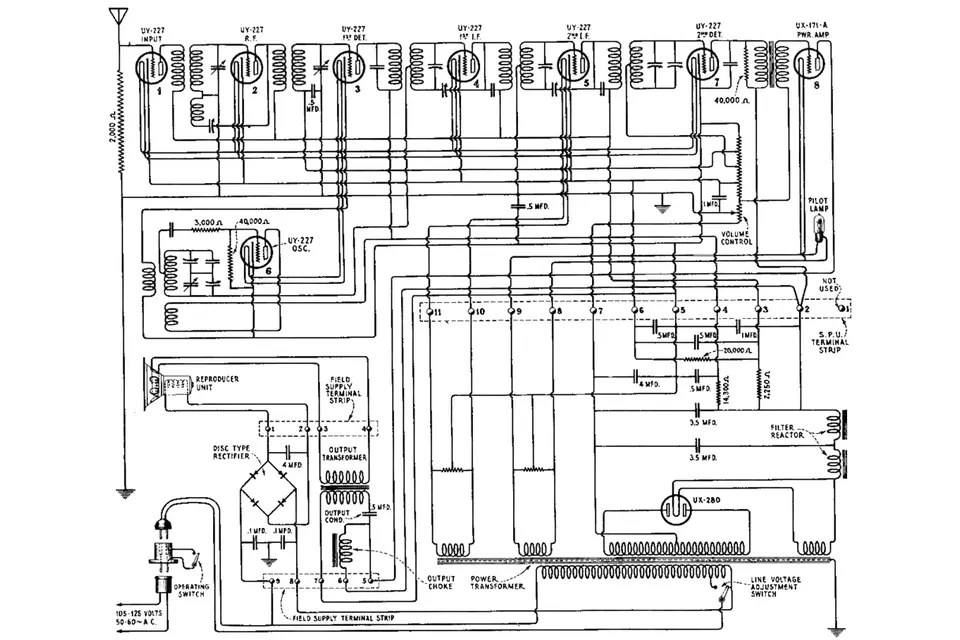
A schematic from a 1928 radio service manual, now in the public domain. The conventions have changed surprisingly little. Photo: RCA, Wikimedia Commons, Public domain.

For any repair beyond cleaning, the service manual is the most valuable tool you can own. It gives the correct parts, voltages and adjustment procedures, and it often explains how the designers intended the equipment to work. For most classic hi-fi a copy exists somewhere; the skill is finding a good one through a legitimate route.
Know which document you need
| Document | What it contains | Useful for |
|---|---|---|
| Owner's manual | Controls, connections, specifications, basic care | Setting up, checking features, confirming the model |
| Service manual | Schematics, board layouts, parts list, disassembly, adjustments, voltages | Diagnosis, recapping, alignment |
| Service bulletins | Factory changes, known faults, revised parts | Explaining why your unit differs from the schematic |
| Third-party service data | Independent schematics and parts information, often for whole ranges of models | Equipment whose factory manual is hard to find |
| Brochures and reviews | Specifications as advertised and as measured | Judging what "normal" performance was |
Note the exact model number and any suffix or region code from the rear panel. Manufacturers often sold slightly different versions for different markets and voltages, and revised boards during production.
Where to look, and in what order
- The manufacturer. Several brands that are still in business keep owner's manuals for older products on their support sites, and some sell or supply service documentation through authorised service centres. It is worth asking, even for old models.
- Publishers of service data. In the United States, Howard W. Sams & Co. has published independent "Photofact" service data since the 1940s, and still sells copies of many folders for consumer electronics.
- Libraries and archives. The Internet Archive hosts a large collection of scanned manuals uploaded by its users, and World Radio History has digitised a great deal of radio and electronics literature: magazines, catalogues, tube manuals and service publications. Public libraries and radio clubs sometimes hold paper collections.
- Owner communities. Clubs and forums for a particular brand or model often know which documents exist, which revision matches your serial number, and where corrections have been published.
- The paper original. Original manuals turn up with equipment and on auction sites. A clean paper copy is often more legible than a scan of a scan.
Copyright
A service manual is a copyrighted document unless it is old enough or was published without the formalities that applied at the time; age alone does not settle it. Prefer copies that the rights holder or an archive makes available, buy from the publisher where one still sells them, and be wary of sites that charge for downloads of documents they do not own. The U.S. Copyright Office explains how fair use is assessed; it is decided case by case, so personal repair use is not an automatic exemption.
Reading a schematic
A schematic shows how parts are connected, not where they sit on the board. A few conventions help:
- Signal flows left to right on most audio schematics: inputs on the left, outputs on the right, power supply at the bottom or on a separate sheet.
- Reference designators (R101, C205, Q3, VR1, RY1) link the symbol to the parts list and to the board layout drawing. On stereo equipment the two channels often share numbers with different hundreds or a suffix.
- Values and ratings are printed next to parts, sometimes in a compact notation such as 4R7 for 4.7 ohms or 47µ/50V for a 47 microfarad, 50 volt capacitor. A note on the sheet explains the units used.
- Voltages marked at test points are what a working unit should read under stated conditions (no signal, a given mains voltage). They are your best diagnostic tool.
- Safety-critical parts are usually flagged, often with a shaded area or a warning symbol, and the manual says they must be replaced only with the specified type.
The parts list and the adjustment section
The parts list gives the original values and, often, the type (for example a specific temperature rating or a non-flammable resistor). When you replace a part, match those specifications, not just the value. The adjustment section lists, in order, which trimmers to set, with what test signal and instrument, and to what reading. Follow the order: bias, DC offset, tuner alignment and tape calibration interact.
Board layouts and disassembly
Layout drawings show the physical position of parts, usually from the component side. Exploded diagrams and disassembly steps save broken clips and lost screws; photograph each stage as you go. Wiring diagrams show connectors and cable colours between boards.
When no manual can be found
For obscure equipment there may be no surviving documentation. Owners in that position often work from a manual for a closely related model from the same maker and period, since circuits were frequently shared across a range; confirm by comparing boards and part numbers before trusting any value. Otherwise, the circuit can be traced by hand and drawn as you go, the markings on parts read and checked against data sheets, and the working channel of a stereo unit used as a reference for the faulty one. Write down everything you learn: your notes may become the manual the next owner is looking for.
Keeping and sharing your copy
- Store a digital copy with the same care as your recordings, and note where it came from.
- Write your measured voltages and any changes you make in the margin or a log: the next owner will thank you.
- If you scan an original you own for your community, check whether the manufacturer or a publisher still distributes it, and respect their terms.
With the manual in hand, the repair guide and the tube guide make a lot more sense.
Sources
- Howard W. Sams & Co., Sams Photofact service data.
- Internet Archive, Manuals collection.
- World Radio History, archive of radio and electronics publications.
- U.S. Copyright Office, Fair Use Index and explanation of the four factors.
- Wikimedia Commons, RCA 1928 service manual schematic (public domain), shown above.
 On the bench
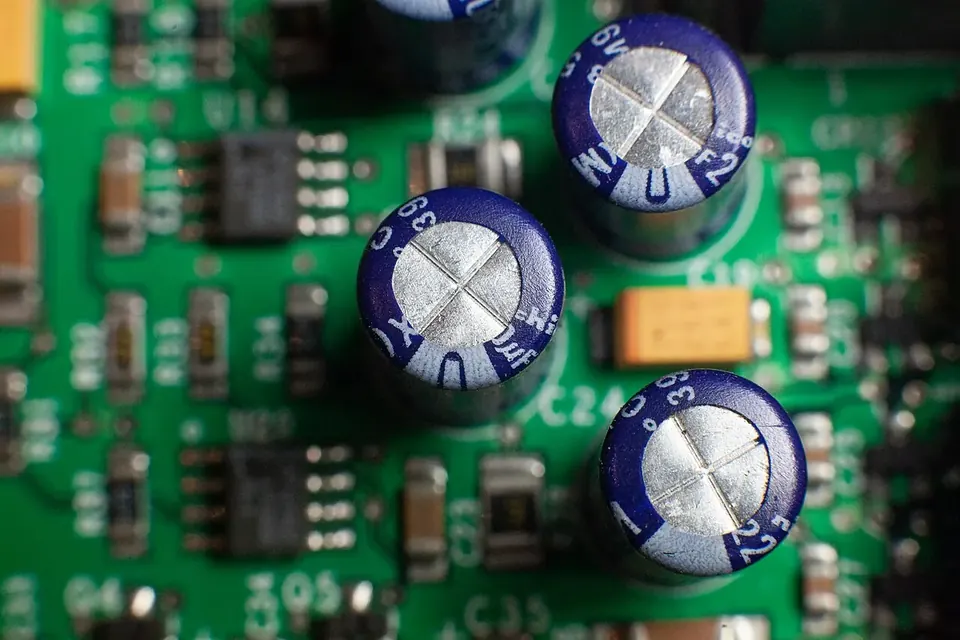
What fails in vintage hi-fi
Capacitors, pots, relays, belts and bias, and why safety comes before any of them.
 On the bench
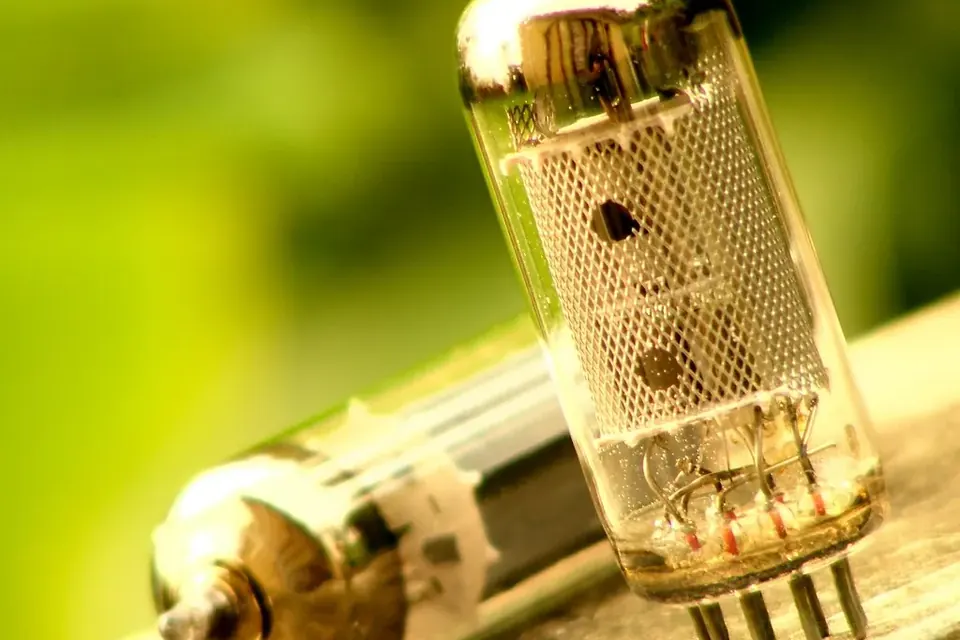
Vacuum tubes in hi-fi
Preamp, power and rectifier tubes, matched pairs, testers, bias, and lethal voltages.
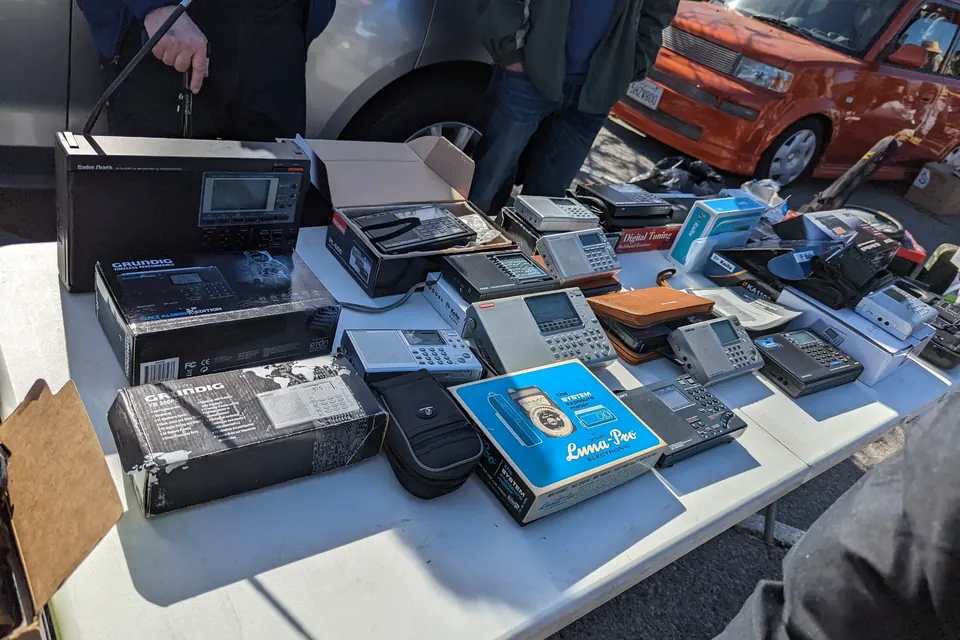
Tracking down rare components
Pin down the exact part, search patiently, use clubs and donors, and verify before you pay.