Vacuum tubes in hi-fi: common types, matching, testing and bias
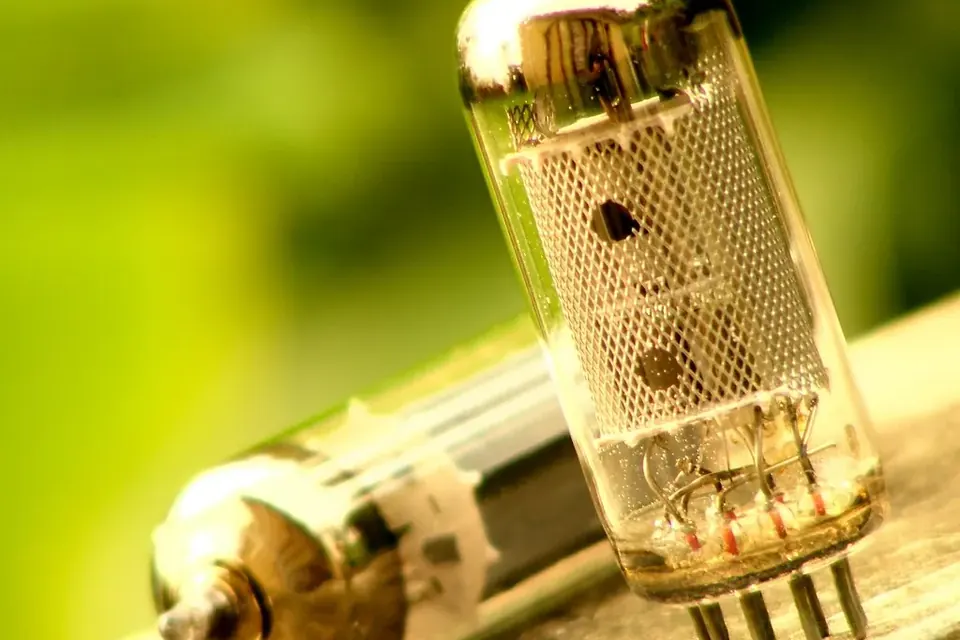
Small-signal tubes: the metal structure inside the glass is the plate, surrounding the grid and cathode. Photo: ronybc.com, Flickr via Openverse, CC0 1.0.
Tubes, or valves in British usage, never left hi-fi. Many classic amplifiers from the 1950s and 1960s are still in daily use, and new tube designs are still made. They are also the part of a tube amplifier that wears out by design, so anyone who owns one ends up learning a little about types, matching and bias.
Lethal voltages
The plate supply in a tube amplifier is typically several hundred volts DC, and the filter capacitors that smooth it can stay charged long after the amplifier is switched off and unplugged. Many amplifiers have bleeder resistors to discharge them, but these can fail. Never reach inside a tube amplifier that is plugged in; after unplugging, discharge and measure every filter capacitor before touching anything. Changing a tube in its socket from the outside, with the amplifier off and cool, is a user job. Everything under the chassis is technician work unless you have been trained for it.
What the tubes in an amplifier do
Most audio tubes are one of three kinds:
- Small-signal (preamplifier and driver) tubes amplify the weak signal from a source and drive the output stage. They are usually double triodes in a small nine-pin envelope.
- Power (output) tubes deliver current to the output transformer, which drives the loudspeakers. Most hi-fi amplifiers use them in push-pull pairs; single-ended designs use one per channel.
- Rectifier tubes, in older or traditional designs, turn the AC from the power transformer into DC for the plate supply. Many amplifiers use solid-state rectifiers instead.
Types you will meet
American and European designations are often both printed on the box: the American code begins with a number for the heater voltage, while the European (Mullard-Philips) code uses letters for heater and function.
| Tube | Also sold as | Role |
|---|---|---|
| 12AX7 | ECC83 | High-gain double triode: phono and line stages, guitar preamps |
| 12AT7 | ECC81 | Medium-gain double triode: drivers, phase splitters |
| 12AU7 | ECC82 | Low-gain double triode: drivers, cathode followers |
| EL84 | 6BQ5 | Small power pentode: lower-power integrated amplifiers |
| EL34 | 6CA7 (similar) | Power pentode, common in European designs |
| 6L6GC | (6L6 family) | Beam power tube, common in American designs |
| KT88 | 6550 (similar) | Large beam tetrode for higher-power amplifiers |
| 300B | — | Directly heated triode, used in single-ended amplifiers |
| 5AR4 | GZ34 | Full-wave rectifier |
"Similar" is important: some pairs are interchangeable in many circuits but not all. Never substitute a different type in an amplifier unless its manufacturer or service documentation allows it, because heater current, pinout and bias requirements can differ. Published data sheets, many collected in online archives, give each type's ratings.
Matched pairs and quads
In a push-pull output stage, the two tubes of each pair share the work. If their idle currents differ a lot, the output transformer carries a net DC that can increase distortion and hum. Sellers therefore offer "matched" pairs and quads, tested to have similar characteristics under the same conditions. Matching matters most for power tubes in amplifiers without individual bias adjustment for each tube. Small-signal tubes are rarely matched except for balanced positions in some preamplifiers.
Testing tubes
A tube tester applies set voltages and measures a quantity such as emission or transconductance, comparing it with a reference figure for that type. Vintage testers vary in what they measure and need their own calibration; a reading is a useful guide rather than a guarantee. Testers also check for shorts between elements, which is the fault most likely to damage an amplifier. In daily use, the amplifier itself often tells you a tube is failing:
- Noise: crackling, hiss or popping in one channel that moves when the tubes are swapped.
- Microphonics: a ringing sound when the tube or chassis is tapped lightly.
- Red-plating: the plate of a power tube glowing red. Switch off immediately: the tube is passing far too much current, usually because of a bias or coupling fault.
- Flashing or purple glow inside the tube that is not the normal faint blue on the glass, or a heater that does not light.
- Blown fuses after replacing a tube. Do not keep replacing the fuse; something is shorted.
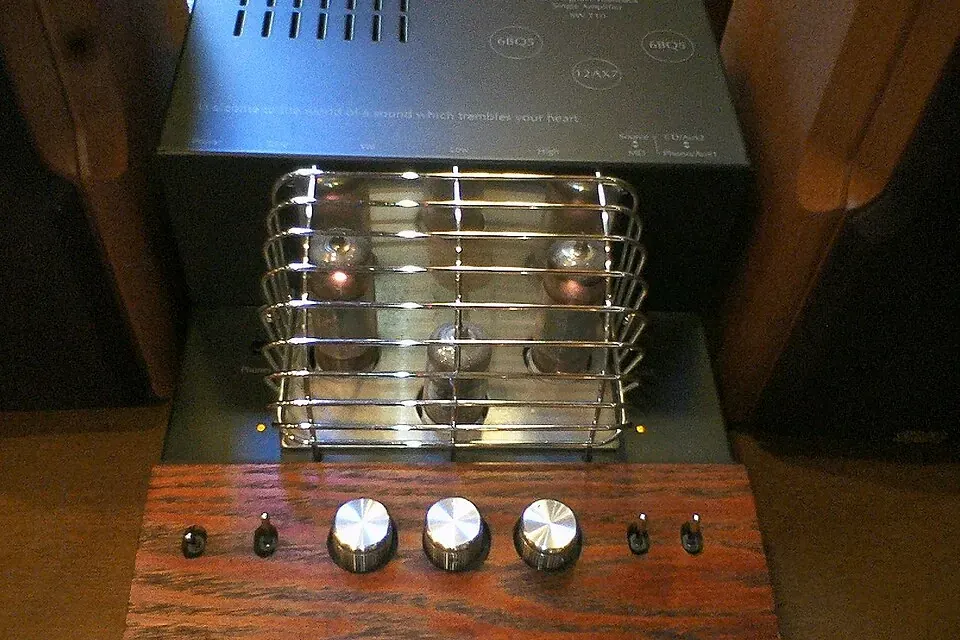
Bias: fixed and cathode
Bias sets the idle current of the power tubes. There are two common arrangements:
- Cathode (self) bias uses a resistor in the cathode circuit. It adjusts itself within limits, so tubes can usually be replaced without adjustment, though large mismatches still matter.
- Fixed bias uses a separate negative supply to the grids, usually with an adjustment pot. It must be checked and set whenever power tubes are replaced, following the manufacturer's procedure.
Many amplifiers with fixed bias have test points or small sense resistors in the cathodes, so the current can be measured as a voltage with a meter. The correct value comes from the amplifier's manual, not from the tube's maximum rating. Some modern amplifiers have automatic bias. If you are unsure which kind you have, the service manual or the manufacturer will tell you.
Looking after a tube amplifier
- Give it ventilation. Tubes run hot, and heat ages the capacitors around them.
- Keep a loudspeaker or a suitable load connected whenever the amplifier is on and playing. Many tube amplifier manufacturers warn against operating without a load, which can damage the output transformer.
- Let it warm up before playing loud; some designs also include a standby switch with a recommended use.
- Replace power tubes in matched sets, and keep the old ones labelled as spares.
- Have older amplifiers checked by a technician: dried capacitors and drifting resistors can stress new tubes. See what fails in vintage hi-fi.
Sources
- Frank Philipp's Electron Tube Data Sheets archive: 12AX7A, EL34, 6L6GC, and the index of manufacturer data sheets.
- Health and Safety Executive (UK), Electricity at work: Safe working practices (HSG85).
- World Radio History, archive of radio and electronics literature, including manufacturers' tube manuals.
- Owner's and service manuals of the amplifier concerned (bias procedure, permitted tube types, load requirements).
 On the bench
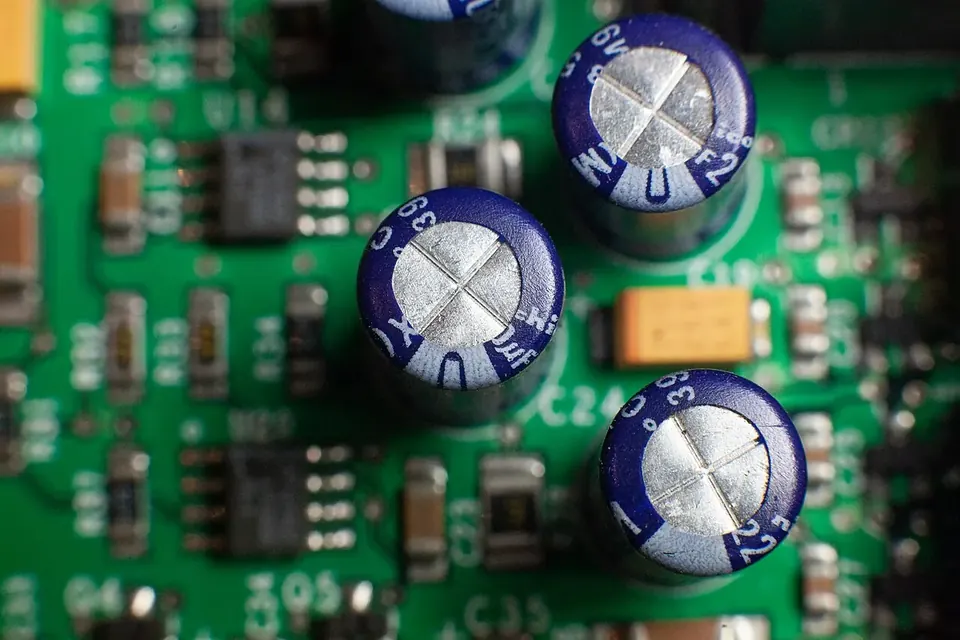
What fails in vintage hi-fi
Capacitors, pots, relays, belts and bias, and why safety comes before any of them.
 On the bench
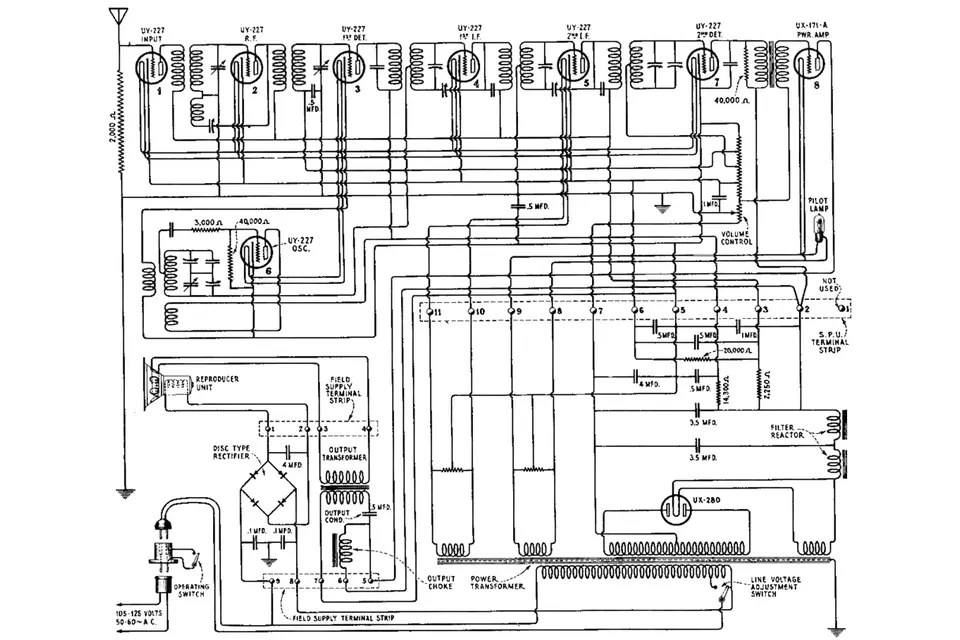
Service manuals and schematics
Where legitimate copies live, what a service manual contains, and how to read a schematic.
The makers behind classic hi-fi
Six manufacturers, their landmark products, and what their names mean on the used market.