Vintage audio questions and answers
Short answers to the questions that come up most often about old hi-fi and old recordings. Each one links to a full guide where there is more to say.
Tape
My old reel squeals and leaves brown residue on the heads. What is happening?
That is the typical sign of binder hydrolysis, or "sticky shed": the binder holding the oxide to the tape has absorbed moisture. Stop playing it at once, clean the heads and guides, and read the section on baking in our tape transfer guide. If the recording is irreplaceable, consider a specialist.
Can I bake a tape in my kitchen oven?
It is not recommended. The temperatures used are low (published accounts cite around 50 to 55 °C) and must be held steadily for many hours, which domestic ovens do poorly. Acetate-based tapes should not be heated at all.
How do I know whether a cassette was recorded with Dolby?
Check the label and the case; many people wrote "Dolby B" or ticked a box on the J-card. If not, play a section without decoding: a tape recorded with Dolby sounds unusually bright and hissy-sharp, and playing it with the matching Dolby type sounds natural. Set azimuth and level first, then decide.
What sample rate should I use to digitise tapes?
For preservation, IASA's guidelines recommend at least 48 kHz and 24 bits, and the U.S. National Archives uses 96 kHz and 24 bits for its masters. Keep an untouched master in WAV, Broadcast WAVE or FLAC, and make MP3s from it for listening. See digitising a home archive.
How should I store tapes after transferring them?
Upright, in their boxes, somewhere cool, dry and stable, away from heat, sunlight, motors and speakers, as the Library of Congress recommends. Do not throw away the originals.
DAT and MiniDisc
Is a DAT transfer really lossless?
It can be, if you copy the digital stream from the deck's S/PDIF or AES3 output into an interface that is synchronised to it, at the tape's own sample rate, with no conversion in between. Then check the result and listen to all of it. See getting audio off DAT.
Why can I not upload my MiniDiscs over USB?
Standard NetMD recorders were designed mainly to send music to the disc, and uploads were restricted. The Sony MZ-RH1 Hi-MD recorder is the model enthusiasts name for uploading standard discs. Otherwise, a real-time capture from the optical output works with any disc. See MiniDisc to digital.
Repair and safety
Is it safe to open my vintage amplifier?
Only unplugged, and only if you understand that capacitors can stay charged after power is removed. Tube amplifiers run at several hundred volts. Cleaning controls from the outside is low risk; anything involving the power supply or mains wiring is for someone trained. Our repair guide explains the rules.
Does every old amplifier need recapping?
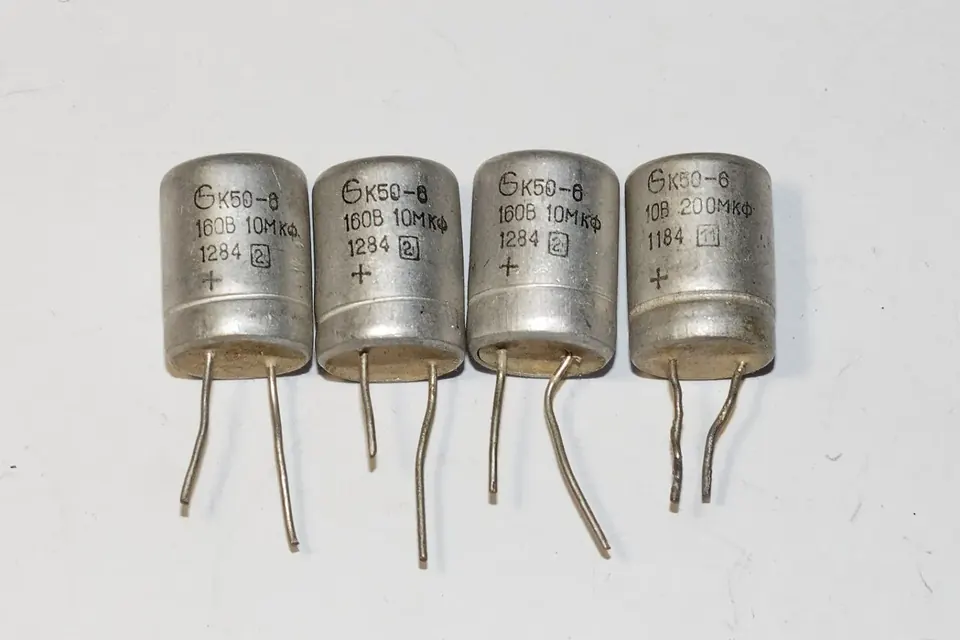
Not automatically. Electrolytic capacitors do age, and replacing tired ones is often worthwhile, but measuring first and working on one area at a time avoids creating new faults. Film and ceramic capacitors seldom need replacing.
My volume knob crackles. Is the amplifier broken?
Usually not: crackling controls and switches are dirty or oxidised contacts, the most common vintage fault. Exercising the control and a contact cleaner made for electronics often fix it; worn parts are replaced.
How do I know when a tube needs replacing?
Noise or crackle in one channel that follows the tube when you swap it, microphonic ringing, a heater that does not light, or a power tube glowing red (switch off at once). A tester gives a guide. Power tubes in push-pull amplifiers are usually replaced as matched pairs. See the tube guide.
Where can I find a service manual?
The manufacturer first, then publishers of service data such as Sams Photofact, archives such as the Internet Archive and World Radio History, and owner clubs. See finding service manuals.
Buying and systems
What should I check before buying a used receiver?
Every input and output, both channels, every control for crackle, the tuner, the lamps and meters, and whether it hums or smells hot. Use a cheap speaker to test, not your best ones, and budget for a service. Our buyer's guide has the full checklist.
Quarter-track or half-track: which reel-to-reel deck do I need?
Most home tapes are quarter-track stereo; most studio-style master copies are half-track at 15 ips. Buy the format that matches the tapes you want to play. See buying a reel-to-reel deck.
Do expensive cables improve the sound?
Adequately thick, secure speaker wire and decent interconnects are all a system needs. Money is better spent on speakers and on placing them well; see good hi-fi on a tiny budget.
Is a famous brand a guarantee of quality?
No. A famous model from decades ago still has decades-old parts. Read about the classic manufacturers, then judge each unit on its condition and history.