What fails in vintage amplifiers, receivers and tape decks, and what to do about it
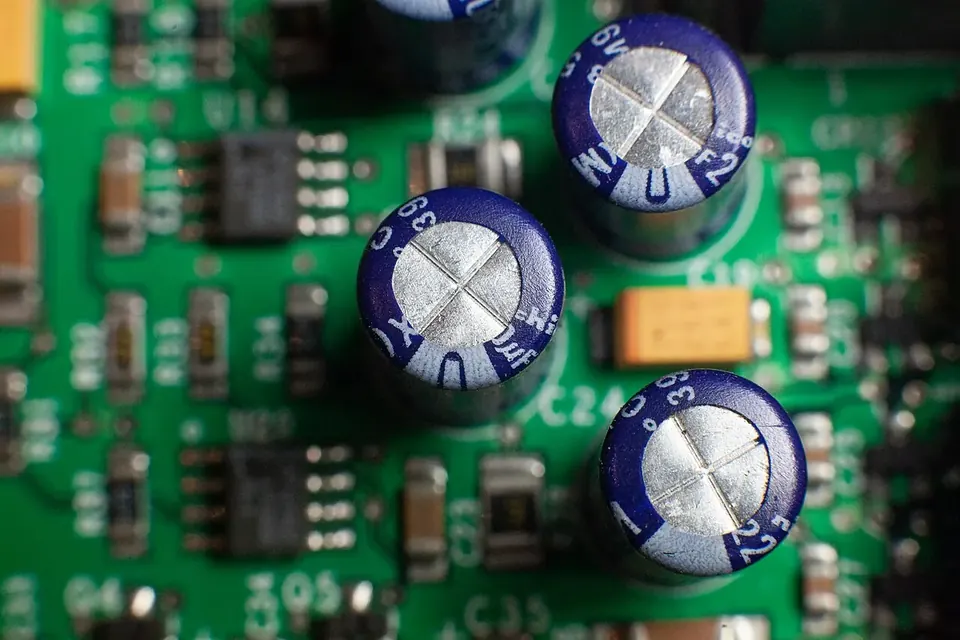
Electrolytic capacitors on a circuit board: the component most often blamed, and replaced, in old equipment. Photo: Giovanna 27, Wikimedia Commons, CC BY 4.0.

A forty-year-old receiver can sound wonderful, but every one of its parts has aged. Some faults are cosmetic, some slowly degrade the sound, and a few can destroy the equipment or hurt the person working on it. Knowing which is which is the first step towards a sensible repair.
Safety first
Mains-powered equipment contains voltages that can kill, and some of it stays dangerous after the plug is pulled. Power-supply filter capacitors can hold a charge for a long time; in tube equipment the voltages are several hundred volts. Unplug before opening, keep one hand away from the chassis when measuring, discharge capacitors through a suitable resistor and confirm with a meter that they are at zero before touching anything. If you are not trained to work on live equipment, do not. The UK Health and Safety Executive's guidance on safe electrical work (HSG85) sets out the principles professionals follow.
Electrolytic capacitors
Aluminium electrolytic capacitors contain a liquid or gel electrolyte that slowly dries out or degrades, especially when hot. As they age, their capacitance can fall and their internal resistance rise. In the power supply that can show up as hum; in the signal path, as reduced bass, distortion or channel imbalance. Visible signs include bulging tops, leaked electrolyte (brown crust on the board) and corrosion around the leads, but many tired capacitors look perfect.
"Recapping" means replacing electrolytic capacitors with new ones of the correct capacitance, a voltage rating at least as high as the original, suitable temperature rating and the right physical size and lead spacing. It is a reasonable, common restoration step, with some cautions:
- Measure before you replace. A capacitance and ESR meter, used out of circuit, tells you what has actually failed.
- Change one area at a time. Replacing two hundred parts in one go multiplies the chances of a wrong value or reversed polarity, and makes the new fault hard to find.
- Do not "upgrade" values blindly. A much larger filter capacitor can stress rectifiers and the power transformer at switch-on; a different coupling value changes the frequency response. The service manual's parts list is the reference.
- Leave film and ceramic capacitors alone unless they are known to be faulty. They age far more slowly.
Mains safety parts
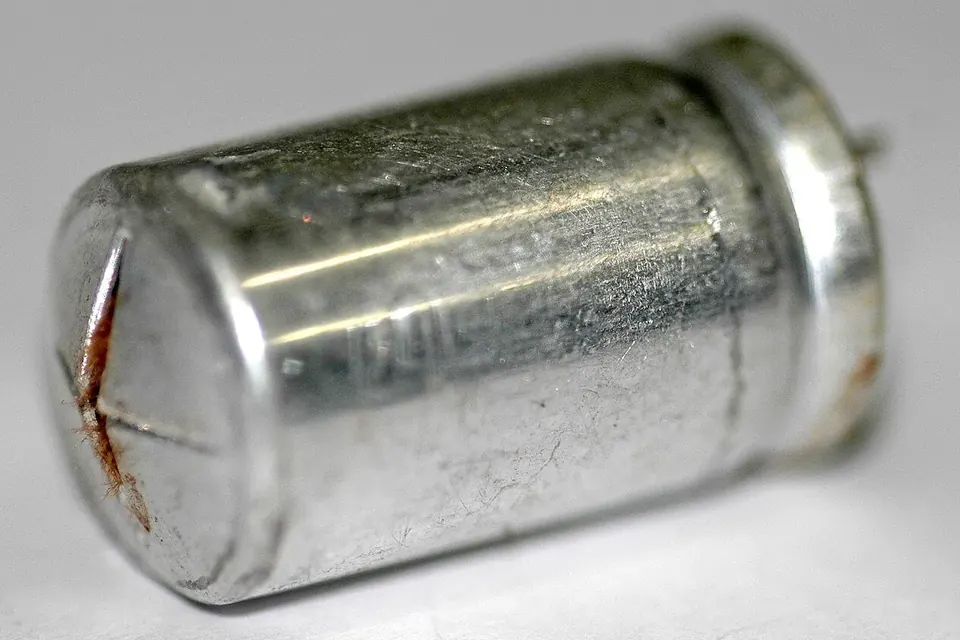
Some older equipment, particularly with two-pin plugs, has capacitors connected between the mains and the chassis to reduce interference. If such a capacitor fails short, the chassis can become live. Replacements must be safety-rated types (marked as class X or Y for their position), never ordinary capacitors. The same applies to fuses: always the rating printed on the equipment or in the manual. This is the one area where a qualified technician and an electrical safety test after the work are strongly recommended.
Scratchy controls, switches and relays
Crackling when you turn the volume or balance, a channel that cuts out, or sound that only returns when you tap the selector: these are dirty or worn contacts, by far the most common complaints. Potentiometers and switches collect oxidation and dust; speaker-protection relays develop pitted, oxidised contacts that cause intermittent or one-sided sound.
- Exercising a control (turning it end to end several times with the power off) often helps temporarily.
- Contact cleaners made for electronics work well when used sparingly and inside the part. Avoid lubricating sprays not made for electronics, which can leave residues that attract dirt.
- Sealed or worn potentiometers and relays are replaced, not cleaned. Many relays have modern equivalents; check the coil voltage and contact rating.
Turntables, tape decks and anything that moves
Rubber is the enemy of old mechanical equipment. Belts stretch, go shiny or turn to sticky goo; idler wheels and pinch rollers harden and slip. The symptoms are slow or unstable speed, wow and flutter, or a deck that will not play at all. New belts are widely available for popular models if you know the exact size; pinch rollers can sometimes be resurfaced or replaced. Old lubricants in turntables and tape transports also harden; cleaning and relubrication, with the grease or oil the service manual specifies, often restores a "dead" mechanism.
Tape decks also need their heads cleaned and demagnetised, and eventually head wear checked. A well-worn head has a visible flat with a ridge or groove where the tape runs. Recording bias and level calibration drift over time, which affects how a deck records and, if the playback head needs alignment, how it plays. See the transfer guide for azimuth.
Lamps, meters and cosmetics
Dial and meter lamps in vintage receivers burn out and are often small incandescent bulbs. LED replacements are popular but may need a series resistor and can change the look; check the voltage and whether the lamp circuit is AC or DC. Cleaning fronts and knobs with mild soapy water, not solvents, avoids damaging printed legends.
Output transistors, bias and DC offset
In solid-state amplifiers, the output stage idle current ("bias") and the DC voltage at the speaker terminals ("DC offset") are set with trimmers described in the service manual. Both can drift. Too much bias makes the amplifier run hot; too little causes crossover distortion; a large DC offset can damage speakers. Adjusting them requires the manual's procedure, a meter, and usually a warm-up period. If an amplifier blows fuses, runs very hot or makes a thump and silence, stop using it: a failed output stage can damage your speakers.
Tackle it yourself, or not?
| Job | Reasonable for a careful amateur? |
|---|---|
| Cleaning controls, switches and knobs | Yes, unplugged, with the right cleaner |
| Replacing belts and lamps | Usually, with the service manual |
| Recapping signal-path boards | Yes, with soldering skill, a parts list and patience |
| Power-supply capacitors, mains wiring, safety capacitors | Only with training in mains safety |
| Bias, alignment, tuner and tape calibration | Only with the manual and the specified test gear |
| Anything inside a tube amplifier | Only with training; see the tube guide |
Whatever you decide, start with the service manual. It tells you the correct parts, voltages and adjustment procedures, and its safety notes exist for a reason.
Sources
- Health and Safety Executive (UK), Electricity at work: Safe working practices (HSG85).
- Nichicon, General description of aluminum electrolytic capacitors (construction, ageing, lifetime and temperature).
- Manufacturer service manuals for the equipment concerned (safety notes, parts lists and adjustment procedures); see finding service manuals.
- Library of Congress, Care, Handling, and Storage of Audio Visual Materials (tape handling).
 On the bench
Vacuum tubes in hi-fi
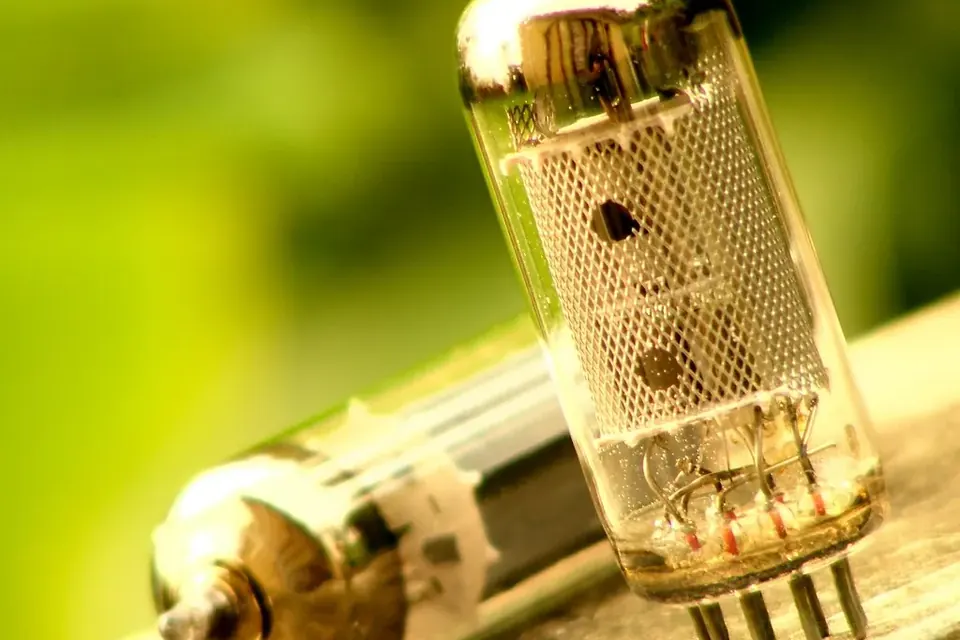
Preamp, power and rectifier tubes, matched pairs, testers, bias, and lethal voltages.
 On the bench
Service manuals and schematics
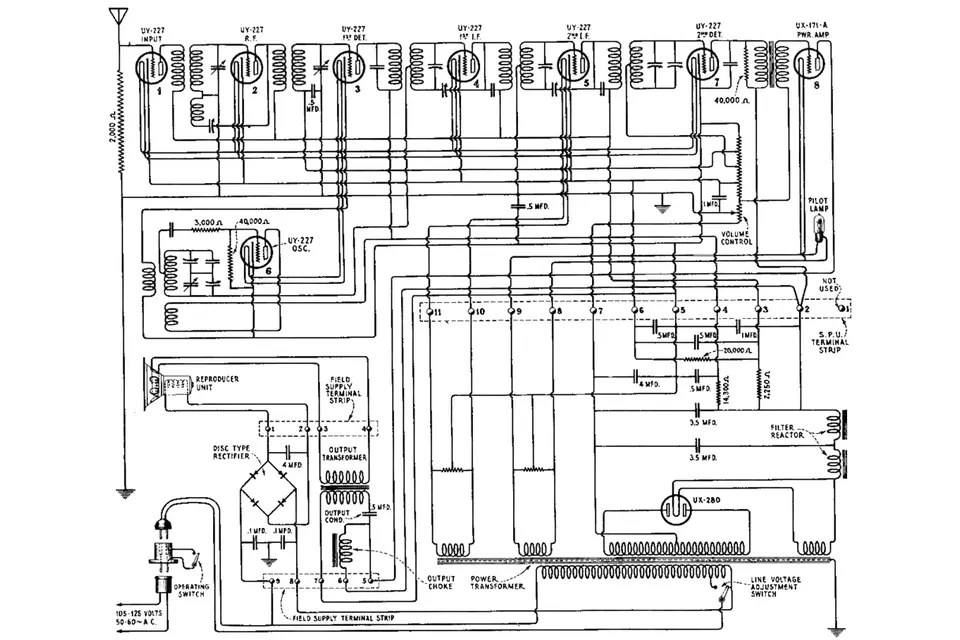
Where legitimate copies live, what a service manual contains, and how to read a schematic.

Buying used vintage hi-fi
Research the model, test what you can, budget for service, and know when to walk away.