The makers behind classic hi-fi: Nakamichi, Denon, McIntosh, Marantz, Revox and Studer, Technics
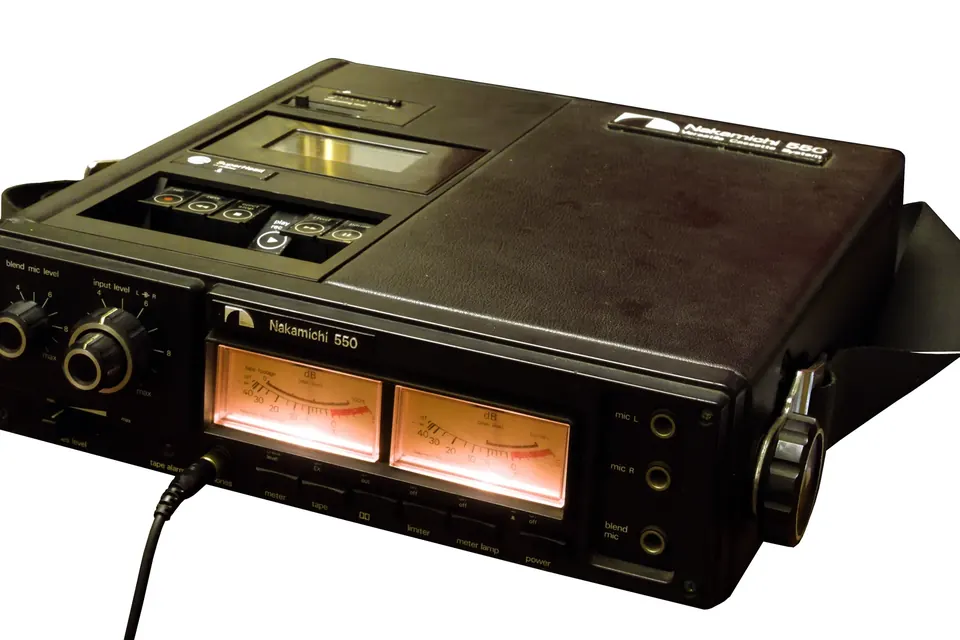
A Nakamichi 550 portable cassette recorder, made from 1974 to 1980. Photo: Alex Noble (edited by Pittigrilli), Wikimedia Commons, CC0 1.0.

A handful of names come up again and again among people who restore and use vintage hi-fi. Each company has a long history and a large catalogue; what follows is a short account of where each started and the products it is best remembered for, kept to facts that published histories agree on. Where sources disagree on a date, we say so.
Capstan is not affiliated with any of these companies. Brand names belong to their owners.
The six below were chosen because their equipment is among the most often bought, restored and asked about today, and because each made at least one product that changed what home audio could do: a tape deck, a turntable drive, a cartridge or an amplifier circuit that others measured themselves against.
Nakamichi
Etsuro Nakamichi founded the company in Tokyo in 1948; it later took the name Nakamichi Research. For years it made equipment, including tape decks, for other brands before selling products widely under its own name in the early 1970s. Its reputation rests on cassette decks. The Nakamichi 1000 and 700, introduced around 1973, are widely cited as early three-head cassette decks, with separate heads for erase, record and playback, so a recording could be monitored off the tape as it was made.
The best-known model is the Dragon (1982), an auto-reverse deck with automatic azimuth correction, called NAAC: a split playback head let the deck detect phase differences between parts of a track and motor-adjust the head angle to match each tape. Published accounts date the end of its production to 1993 or 1994. On the used market, Nakamichi decks are prized but complex; the specialised mechanisms and heads make an experienced technician essential.
Denon
Denon's history runs through the Japanese record company Nippon Columbia, with roots in early twentieth-century recording. The firm built a strong reputation in broadcast and recording equipment. Its most famous product for record lovers is the DL-103 moving-coil cartridge, which Denon's own literature says was developed with the research laboratories of the Japanese broadcaster NHK in 1964 for broadcast use; it was later sold to the public and remains in production. Denon also made amplifiers, tuners, cassette decks and CD players; its POA series of power amplifiers is still discussed among collectors.
McIntosh
Frank McIntosh, with engineer Gordon Gow, began building amplifiers at the end of the 1940s; the company was formally established in 1949 and moved to Binghamton, New York, in 1951, where it remains. Its first amplifier, the 50W-1, used the "unity coupled" output circuit for which the company obtained patents. McIntosh amplifiers are known for their output transformers or "autoformers", which let them drive a range of speaker impedances, and for glass front panels with illuminated meters. Vintage McIntosh tube amplifiers are among the most sought-after on the market, which also makes them a target for misdescribed and over-restored examples.
Marantz
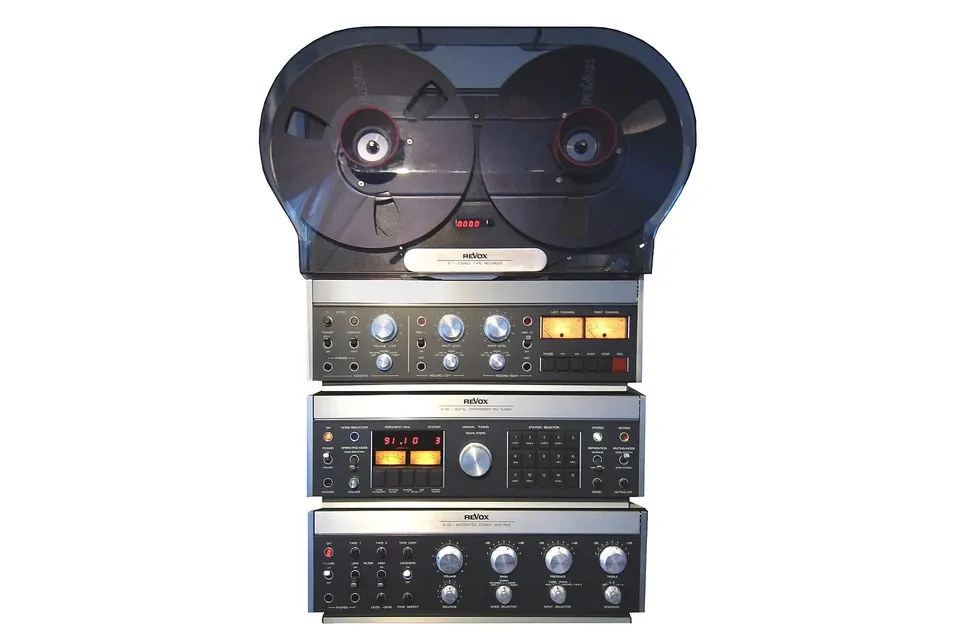
Saul Marantz, a New York designer and musician, built a phono preamplifier called the Audio Consolette to cope with the many record equalisation curves in use before the RIAA standard. It became the Model 1. The company's own timeline gives 1953 for the founding of the Marantz Company; other accounts place the first preamplifiers a year or two earlier. The Model 7 preamplifier (1958), the Model 9 power amplifier and the Model 10B tuner made the brand's name among enthusiasts. In the 1970s Marantz became best known for its solid-state receivers, with their wide dial windows and, on many models, a large tuning knob. The brand passed through several owners and is today part of the same group as Denon.
Revox and Studer
Willi Studer started his company in Switzerland in 1948, initially making oscilloscopes, and produced his first tape recorder soon after. The professional products carried the Studer name, while consumer machines were sold as Revox, a brand introduced in 1951. The transistorised Revox A77 of 1967, with a servo-controlled capstan motor, sold in very large numbers. Its successor, the B77, is dated by different sources to 1977 or later. Studer's professional recorders, such as the A80, were standard equipment in many studios and broadcasters. The professional brand was later sold and is now owned by a broadcast equipment group; Revox continues as a separate company.
For buyers, Revox and Studer machines have the advantage of good documentation and an active community of technicians; see what to check on a reel-to-reel deck.
Technics
Technics was introduced by Matsushita (now Panasonic) in 1965 as a name for premium loudspeakers. Its landmark was the SP-10, the first direct-drive turntable on the market, designed under Shuichi Obata; Technics' own history dates it to 1970, while other sources give 1969. The SL-1200, launched in 1972, became a standard for broadcasters and, later, for DJs worldwide. Panasonic largely retired the brand in 2010 and revived it in 2015. Old Technics turntables are plentiful and generally robust, which makes them a good choice for a budget system (see our budget guide).
Reading a famous name on the used market
- Fame raises prices more than it raises reliability. A famous model still has forty-year-old parts.
- Check the exact model and version. Brands sold very different equipment under one name over decades.
- Look for documentation and a service history, especially for high-value tube amplifiers and complex cassette decks.
- Beware of reproductions and "restored" units with non-original parts sold as original; owner clubs can help verify.
Sources
- Wikipedia, Nakamichi and Nakamichi Dragon; Sound & Vision, Vintage test report: Nakamichi Dragon.
- Denon, DL-A110 product literature (history of the DL-103).
- Engineering and Technology History Wiki, McIntosh Engineering Labs.
- Marantz, The Marantz timeline; The Absolute Sound, Legends of high-end audio: Saul Marantz.
- Wikipedia, Studer and Revox.
- Technics, History; Wikipedia, Technics (brand); IEEE Spectrum, Consumer Electronics Hall of Fame: the SL-1200.
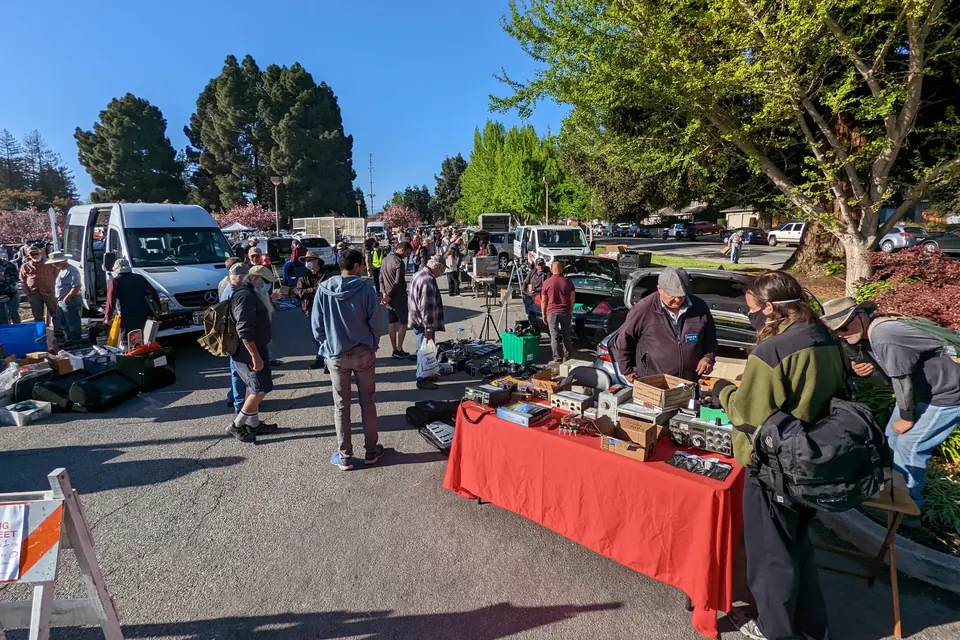
Buying used vintage hi-fi
Research the model, test what you can, budget for service, and know when to walk away.
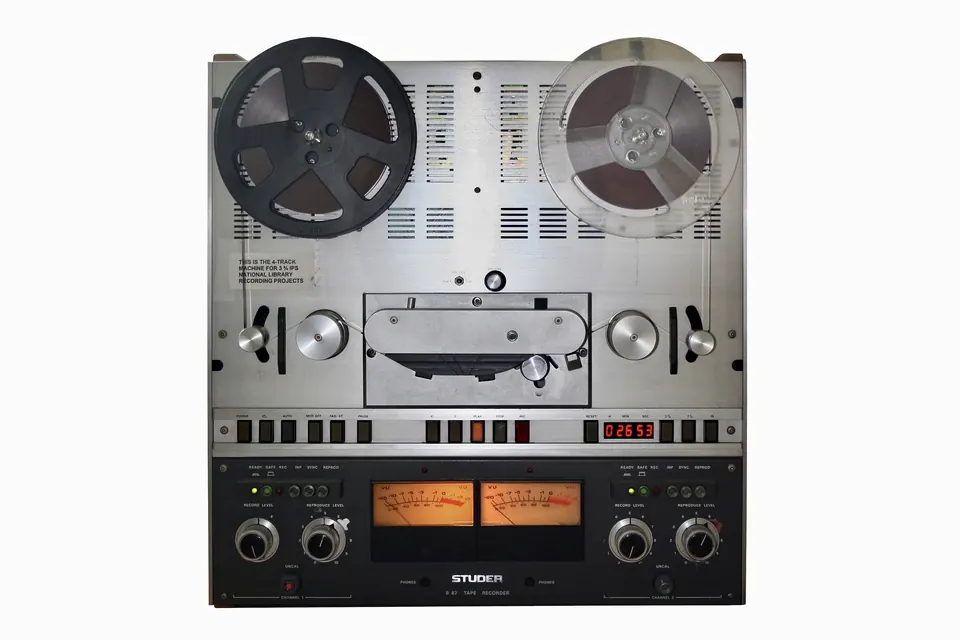
Buying a reel-to-reel deck
Track format, head wear, pinch roller, brakes and tension: a checklist before you pay.
 On the bench
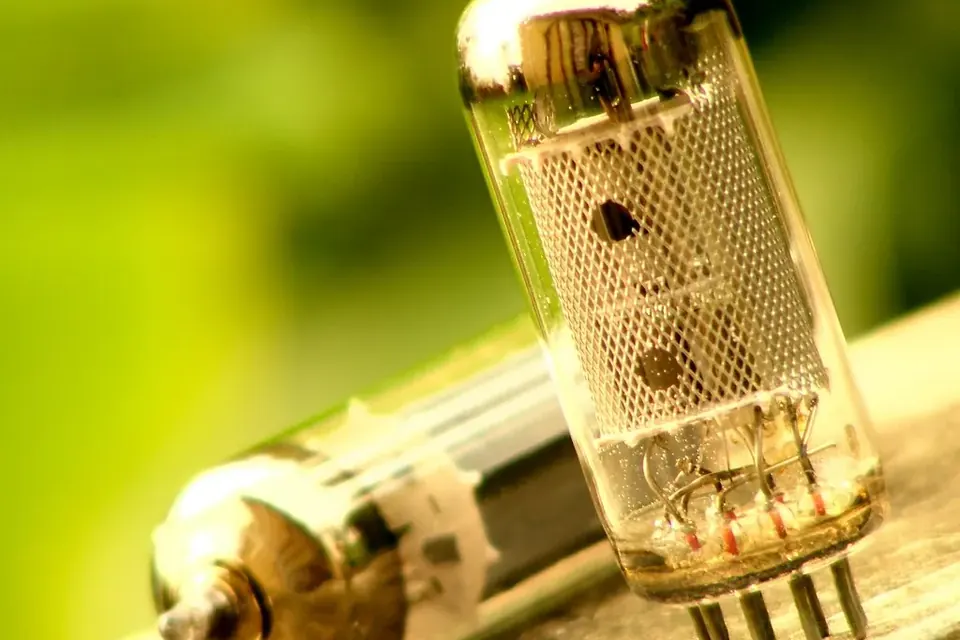
Vacuum tubes in hi-fi
Preamp, power and rectifier tubes, matched pairs, testers, bias, and lethal voltages.