Buying used vintage hi-fi: what to check before you pay
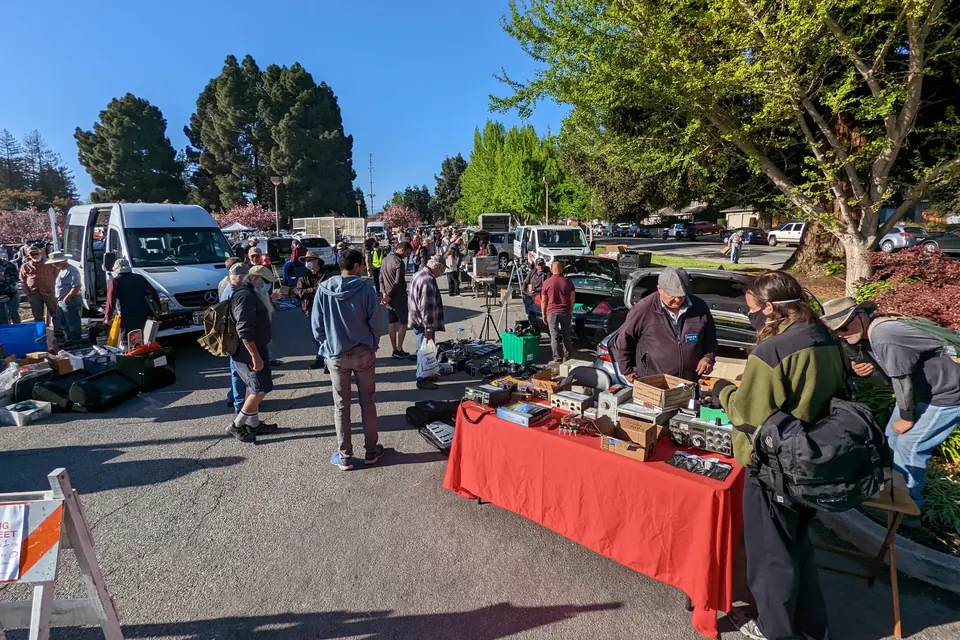
An electronics flea market: good hunting ground, as long as you can test before you buy. Photo: leighklotz, Wikimedia Commons, CC BY 2.0.

Vintage hi-fi can be excellent value, and sometimes a trap. The same model can be a cleanly serviced classic or a box of tired parts with a shiny front panel. Buying well is a matter of research before you look, patience while you look, and a short, systematic test before you pay.
Research the model first
Before you go hunting, read about the models you are interested in: original reviews, owner forums, the owner's and service manuals. You are looking for three things.
- Known weak points. Many models have a typical fault: a particular relay, a brittle plastic gear, an output stage that dislikes low-impedance speakers. Knowing it tells you what to test and what a repair involves.
- Parts availability. Belts and lamps are easy; a unique display, a custom chip or a proprietary tape head may be impossible to replace.
- Variants. Regional versions run on different mains voltages. A unit built for another country may need a transformer setting change, or may not be convertible at all. Check the rear panel and the manual.
Specifications from the period can help compare amplifiers, with care. In the United States, the Federal Trade Commission's Amplifier Rule (16 CFR Part 432) sets out how power output claims for home amplifiers must be stated, including the load impedance, frequency range and distortion; a figure quoted without those conditions is hard to compare.
Read the listing like a technician
| Listing says | What it can mean |
|---|---|
| "Powers on" | The lamps light. Nothing more is promised. |
| "Worked when last used" | Not tested now, perhaps for years. |
| "Needs cleaning" | Probably scratchy controls or intermittent channels; often fixable, sometimes not. |
| "Serviced" or "recapped" | Ask by whom, when, and for a list of what was replaced. |
| "For parts or repair" | Take this literally and price it accordingly. |
Ask for photos of the rear panel, the serial plate and, if the seller will, the inside. Signs of earlier work are not bad in themselves; neat work with matching parts is reassuring, while burnt areas, scorched boards, missing screws and mismatched knobs are not.
Testing in person
Bring a pair of headphones, a small known-good source (a phone with a cable adapter is enough), a short pair of speaker cables and a cheap speaker you do not mind risking. Do not connect your best speakers to an unknown amplifier.
- Before power: look for a correct mains cord and plug, no smell of burning, no rattling loose parts. Ask whether it has been switched on recently.
- At switch-on: listen for hum from the transformer and the speakers, and for the click of a protection relay after a few seconds where the design has one.
- Every input and output: both channels, at low volume first. Turn every knob and press every button and listen for crackle, dropouts and imbalance.
- Tuner: check that stations come in and the meter moves.
- Turntables: speed stability on a sustained piano note, arm movement, and whether the cartridge and stylus are included and undamaged.
- Tape decks: see the reel-to-reel checklist; for cassette decks, record and play back a short test, and look at the heads and pinch roller.
- Speakers: gently press each woofer cone evenly (it should move smoothly with no scraping), look for rotted foam surrounds and torn cones, and listen to each driver at low volume.
Budget for service
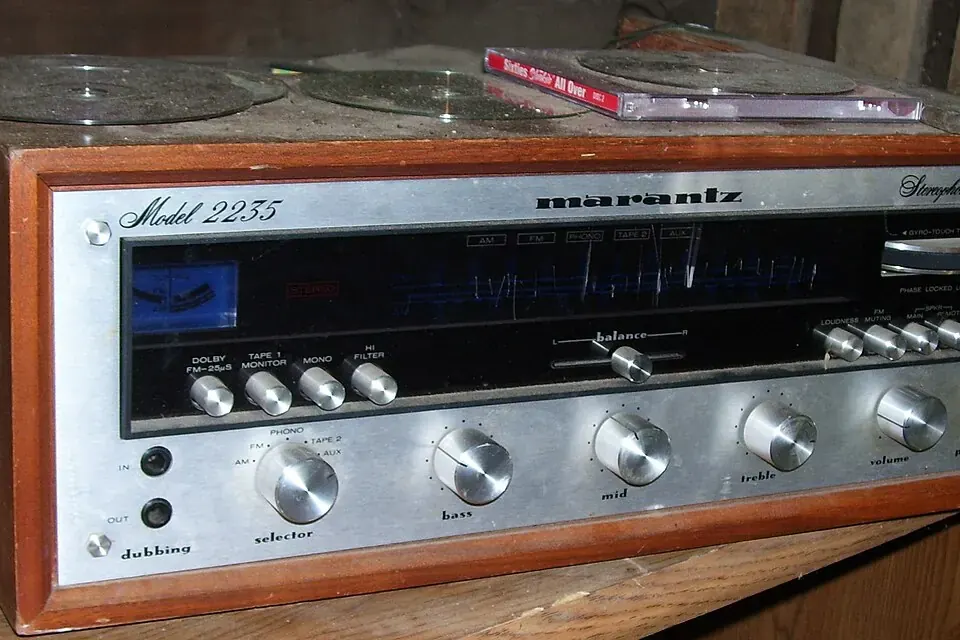
A forty-year-old unit that "works" usually still benefits from a service: cleaning controls, replacing belts and lamps, checking bias and DC offset, perhaps recapping. The repair guide describes what is typically involved. Ask a local technician what they would charge before you buy, and treat that as part of the price. A unit already serviced by someone reputable, with paperwork, is often the better value even if it costs more up front.
Shipping and collection
Heavy amplifiers and turntables are often damaged in transit. Transformers can break their mounts, tonearms bend and platters crack bearings. If you cannot collect in person, insist on proper double boxing, a turntable with its platter removed and the arm secured, and tape decks with transport locks or packing as the manual describes. Pay through a method that offers buyer protection, and keep all messages. Inspect and test on arrival, and report damage immediately.
Mains voltage, plugs and paperwork
Equipment imported from another market may be set for a different mains voltage or frequency. Many units have a voltage selector on the back or inside, which the manual describes; some were made for one voltage only and need a suitable step-up or step-down transformer, which must be rated for the load. A deck or turntable built for a different mains frequency may also run at the wrong speed unless it has a frequency-independent motor drive. Ask before buying, and check the rear-panel label yourself.
Keep everything that comes with the equipment: the receipt, the manual, the original box, service invoices and any notes from earlier owners. They help a technician, they show what has been done, and they make the unit easier to sell on honestly later.
When to walk away
- The seller will not let you hear it, or will not answer straightforward questions.
- There are signs of overheating, liquid damage or crude repairs to the power supply.
- The price assumes a perfect unit, but the description says "untested".
- Key parts are unique to the model and no longer available, and they are the parts that are failing.
- It is a mains-powered item with a damaged cord or plug, and you are not able to have it made safe.
Patience is the most underrated tool. Popular classics come up for sale again and again. If you are looking for something rare, see tracking down rare components.
Sources
- U.S. Code of Federal Regulations, 16 CFR Part 432, Power output claims for amplifiers utilized in home entertainment products.
- Health and Safety Executive (UK), Electricity at work: Safe working practices (HSG85).
- Manufacturer owner's and service manuals for the model concerned; see finding service manuals.
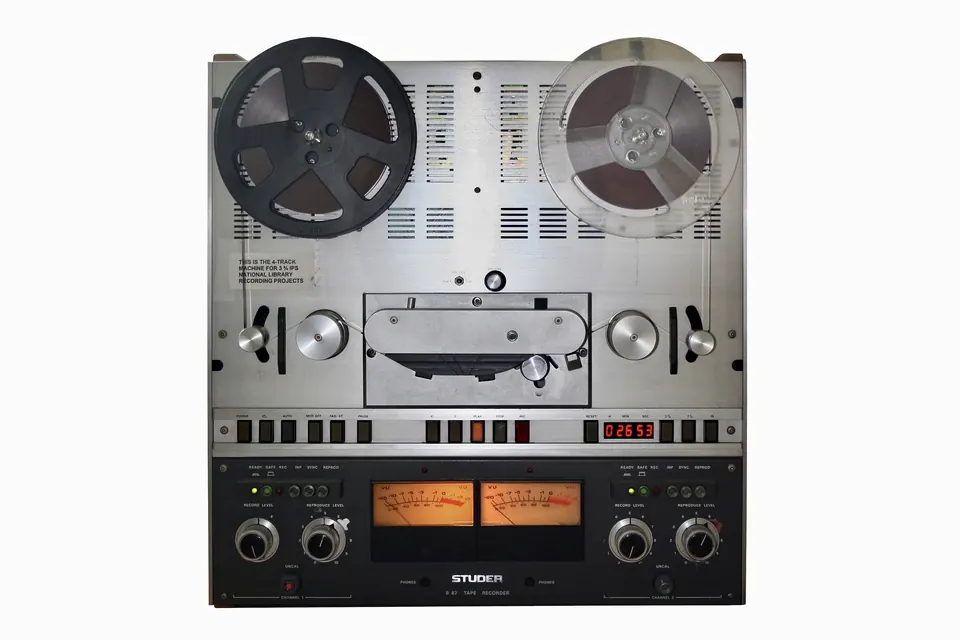
Buying a reel-to-reel deck
Track format, head wear, pinch roller, brakes and tension: a checklist before you pay.
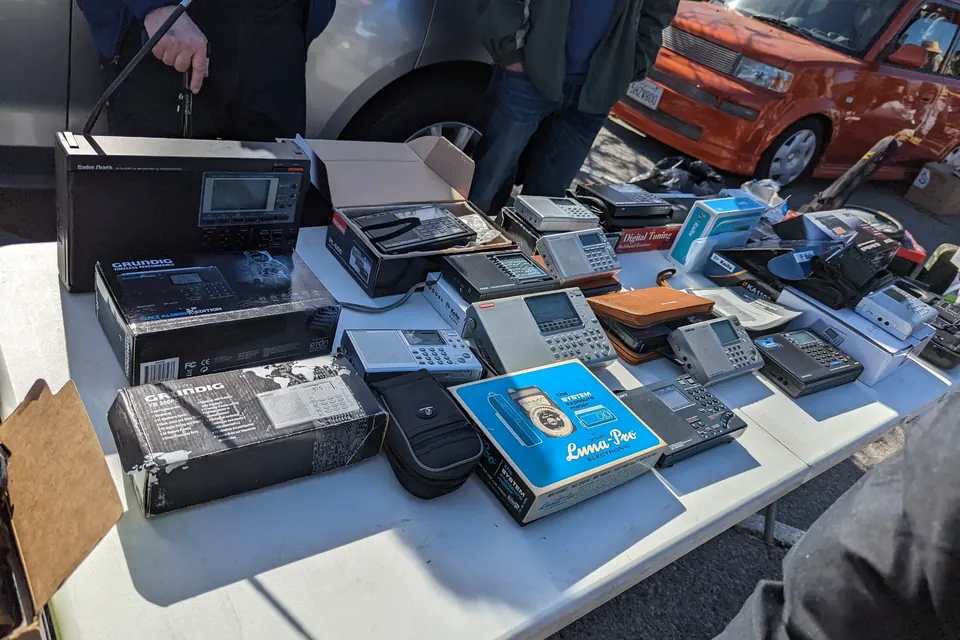
Tracking down rare components
Pin down the exact part, search patiently, use clubs and donors, and verify before you pay.
Good hi-fi on a tiny budget
Speakers first, secondhand amplifiers, free gains from placement, and nothing spent on magic cables.