A good hi-fi system on a tiny budget
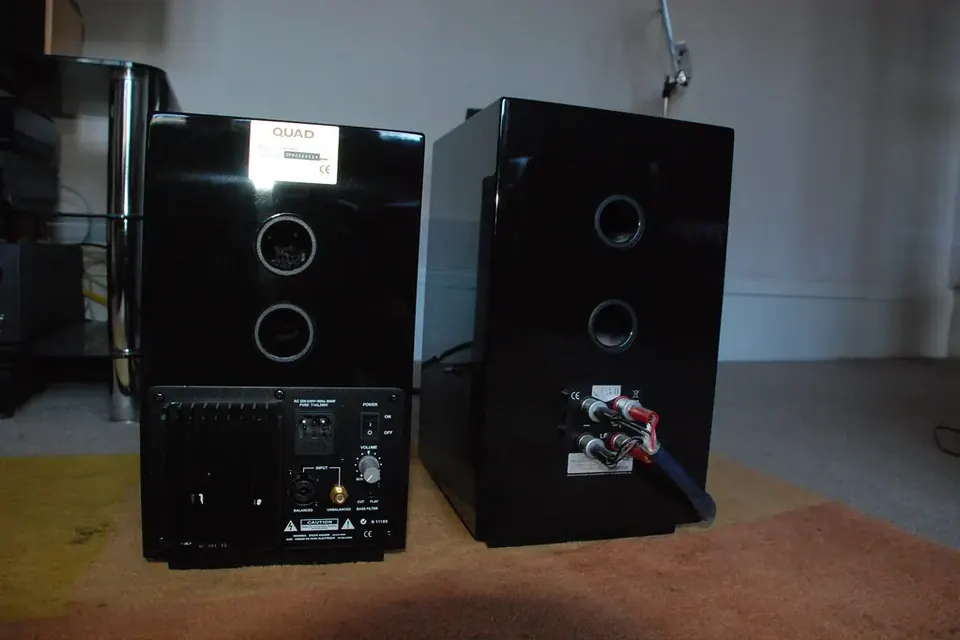
Small speakers, placed with care, can sound far better than their price suggests. Photo: Jordanhill School D&T Dept, Flickr via Openverse, CC BY 2.0.
The best-sounding system is rarely the most expensive one. It is the one where the money went to the parts that matter, the speakers were set up properly, and nothing was spent on accessories that change nothing. With patience and a willingness to buy secondhand, a very modest sum goes a surprisingly long way.
Where the money should go
In a simple stereo, the loudspeakers and the room they sit in shape the sound far more than any other part. Research on loudspeakers and listening rooms, summarised by acoustician Floyd Toole in his book on sound reproduction, has long pointed to the speakers' behaviour in the room as the dominant factor in what listeners hear. A reasonable order of priority:
- Speakers, chosen for your room size and how loud you listen.
- Placement, which costs nothing (see below).
- An amplifier with enough clean power for those speakers.
- A source: the phone, computer or CD player you already have, or a turntable if you love records.
- Everything else, last.
Secondhand speakers
Speakers are simple, robust and heavy to ship, which makes them good value locally. Bookshelf speakers from established makers turn up constantly at thrift stores, garage sales and online classifieds. What to check:
- Surrounds: the flexible ring around the woofer. Foam surrounds from many decades ago often crumble; they can be replaced, but factor it into the price.
- Cones and domes: no tears, no pushed-in tweeter domes.
- Movement: pressed gently and evenly, a woofer should move smoothly with no scraping.
- Sound: play each speaker at low volume and listen for buzzes and rattles, and check that both sound alike.
Matching the amplifier to the speakers
Speaker sensitivity, usually given in decibels for one watt at one metre, tells you how loud a speaker plays for a given power. Each additional 3 dB of loudness requires roughly double the amplifier power, so a speaker a few decibels more sensitive needs much less power to fill a room. Small rooms and moderate listening levels need modest power. Check the speakers' rated impedance against what the amplifier's manual allows; some older amplifiers dislike very low-impedance loads.
When comparing amplifier power figures, look for the conditions: in the United States, the FTC's Amplifier Rule requires home amplifier power claims to state load impedance, frequency range and distortion, which is why a properly specified figure is more meaningful than a "peak" number.
Secondhand integrated amplifiers and receivers from the 1970s to the 1990s are often inexpensive and capable. Follow the checks in our buyer's guide and expect to clean scratchy controls; a unit with crackling knobs may be cheap for a reason that a can of the right cleaner fixes, or for a reason it does not.
Free improvements: placement
An hour moving speakers often does more than an upgrade.
- The triangle. The ITU's recommendations for listening rooms place stereo speakers at 30 degrees either side of the listener, which works out as an equilateral triangle between the two speakers and your head. Start there.
- Height. Tweeters roughly at ear height when seated. Stands, or even sturdy books, beat the floor or a low shelf.
- Distance from walls. Moving a speaker closer to a wall or corner increases bass, sometimes too much. Move in small steps and listen to a track with steady bass.
- Toe-in. Angle the speakers slightly towards you and adjust until the centre image (a solo voice) is focused.
- Symmetry. Similar surroundings left and right help the stereo image.
- Soft furnishings. A rug, curtains and a sofa tame a bare, echoey room.
Sources that cost nothing
A phone, tablet or computer connected by cable to the amplifier's line input is a perfectly good source. A modest external digital-to-analogue converter can help if your computer's headphone output is noisy, but try what you have first. Secondhand CD players are cheap; check that the drawer opens smoothly and that it reads a slightly scratched disc. Records are wonderful but add the cost of a turntable, cartridge and phono stage, so start there only if vinyl is the point.
What not to spend on
- Expensive speaker cables and interconnects. Use adequately thick copper speaker wire, keep it reasonably short and the same length on both sides, and make secure connections. That is all a cable needs to do.
- Accessories that promise transformations. If a product cannot show a measured difference, save the money for speakers or for records.
- A bigger amplifier than the room needs.
Cheap and safe
Very cheap mains-powered gear of unknown origin and vintage equipment with damaged cords are the two budget risks worth taking seriously. Replace damaged mains leads, keep ventilation slots clear, and do not open mains equipment unless you know how to work on it safely; see the repair guide.
Headphones as the cheapest upgrade
If a room cannot accommodate speakers well, a good pair of headphones and a clean headphone output are often the most effective way to spend a small sum. Many vintage receivers have a headphone socket; check it with low-impedance headphones at low volume first.
A sample path
Begin with a pair of used bookshelf speakers and a secondhand integrated amplifier, your phone as a source, and an afternoon of placement. Listen for a few weeks. If you then want more, the next step is usually better speakers, not more electronics. If you want to explore the classics, our page on the manufacturers behind vintage hi-fi is a good place to start.
Sources
- Floyd E. Toole, Sound Reproduction: The Acoustics and Psychoacoustics of Loudspeakers and Rooms, Routledge (Focal Press).
- International Telecommunication Union, Recommendation ITU-R BS.1116 and ITU-R BS.775 (loudspeaker arrangement for listening).
- U.S. Code of Federal Regulations, 16 CFR Part 432, power output claims for home amplifiers.
Buying used vintage hi-fi
Research the model, test what you can, budget for service, and know when to walk away.
Tracking down rare components
Pin down the exact part, search patiently, use clubs and donors, and verify before you pay.
The makers behind classic hi-fi
Six manufacturers, their landmark products, and what their names mean on the used market.