Vinyl and cassette sales in 2025: the US and UK numbers, format by format

Secondhand records in the crates of a shop in Lyon. Used sales like these are not counted in any of the industry figures below. Photo: Fabien Barral (Mr Cup), Unsplash, via Wikimedia Commons (CC0).
Every spring the record industry publishes its sales for the previous year, and every year the headline is the same: vinyl is up again. The 2025 figures are no exception, but they say more than that. In the United States, records crossed a symbolic line in money terms; in Britain, they grew faster than at any point since 2021; the CD kept shrinking; and the cassette, the format that fills so many family boxes, posted the steepest rise of all from a very small base. Here are the numbers, where they come from, and what they do and do not tell you if you are shopping for a turntable or a cassette deck.
The key figures
- United States, vinyl: 46.8 million records shipped in 2025, up 7.9%, worth $1.04 billion at wholesale, up 9.3%. The RIAA counts it as the 19th year of growth in a row.
- United States, CD: 29.5 million discs, down 11.6%, worth $312 million, down 7.8%.
- United Kingdom, vinyl: 7.6 million LPs sold, up 13.3%, the 18th consecutive year of growth (BPI).
- United Kingdom, cassettes and other physical formats: £4.6 million in retail sales, up 95% (ERA).
- Weight of physical media: about 12% of US recorded-music revenue, against 82% for streaming.
United States: records pass a billion dollars
The Recording Industry Association of America published its 2025 year-end revenue report in March 2026. It is the first full-year report built on wholesale values (what labels receive, not what shoppers pay at the till), a change the RIAA made to line up with international reporting. Total recorded-music revenue reached a record $11.5 billion, up 3.1%.
Within that, physical formats brought in $1.38 billion, up 5.0%, and vinyl did almost all the work. The detailed table in the report itself shows records rising from $954.4 million to $1,042.9 million, while CDs slipped from $338.9 million to $312.4 million. Music Week, which covered the release, noted that vinyl had passed $1 billion for the first time in more than four decades. The RIAA adds that nearly half of the world's vinyl revenue is now generated in the United States.
| Format | Units 2024 (m) | Units 2025 (m) | Value 2024 ($m) | Value 2025 ($m) | Change in value |
|---|---|---|---|---|---|
| Vinyl | 43.4 | 46.8 | 954.4 | 1,042.9 | +9.3% |
| CD | 33.3 | 29.5 | 338.9 | 312.4 | −7.8% |
| Other physical | 2.16 | 2.18 | 22.1 | 25.8 | +16.5% |
| Total physical | – | – | 1,315.5 | 1,381.0 | +5.0% |
Source: RIAA, Year-End Recorded Revenue Report 2025, wholesale dollar value net after returns. "Other physical" groups cassettes, music video discs and smaller formats; the RIAA does not split it further.
Two small calculations help to read the table. Divide value by units and the average record brings its label about $22.30 at wholesale, against $10.60 for a CD: part of vinyl's revenue lead comes from price, not only from volume. And records still make up only about 9% of all US recorded-music revenue. The RIAA's own sales database lets you trace the format back to its 1970s peak, which is a useful reminder that 46.8 million records a year remains a niche next to the hundreds of millions shipped at the height of the LP era.
United Kingdom: more LPs, and more value
British figures arrive earlier, at the end of December, from two bodies that count differently. The BPI, which represents labels, counts units through the Official Charts Company. Its review of 2025 reports 7.6 million vinyl LPs sold, up 13.3% after a 9.1% rise in 2024, and states that "sales of vinyl LPs increased for an 18th consecutive year in 2025". All physical album formats together reached 17.6 million units, up 1.4%: the second year of growth after nineteen years of decline. Streams still accounted for 89.3% of consumption.
The Entertainment Retailers Association counts money at the till. Its figures, reported by Music Week, put physical music at £368.1 million, up 11.5%, with vinyl revenue up 18.5%, CD sales broadly flat at £125.0 million (down 1%), and "other physical formats", mostly cassettes, up 95% to £4.6 million. Now Spinning pointed out that physical formats reached 15% of UK music revenue, their highest share since 2021.
| Measure | 2025 | Change on 2024 | Source |
|---|---|---|---|
| Vinyl LPs sold | 7.6 million | +13.3% | BPI / Official Charts |
| All physical album units | 17.6 million | +1.4% | BPI / Official Charts |
| Physical retail value | £368.1 million | +11.5% | ERA |
| Vinyl retail value | not published separately | +18.5% | ERA |
| CD retail value | £125.0 million | −1% | ERA |
| Cassette and other physical | £4.6 million | +95% | ERA |
What the figures leave out
None of these numbers includes the secondhand trade: the crates in the photograph above, record fairs, online marketplaces and charity shops. For anyone reading this site, that is the larger part of the story, and nobody publishes a reliable total for it. What the new-release figures do show is that the habit of buying music on a physical carrier is spreading to younger buyers who also stream, which keeps demand high for the machines that play it.
The cassette deserves a sober reading. A 95% rise sounds dramatic, but £4.6 million is about 1% of British physical sales, and the US "other physical" category, cassettes included, amounts to 2.2 million units. New cassette releases are mostly limited runs sold as collectables. The machines to play them, on the other hand, are almost all old, which is why the condition of heads, belts and pinch rollers matters so much when you buy one. Our guide to buying a vintage cassette deck covers the checks, and the tape formats table gives the speeds and track layouts.
What this means if you are buying gear
- Turntables and phono stages stay in demand. A growing record-buying public competes for the same serviceable 1970s and 1980s decks. Budget for a new stylus and a proper set-up rather than paying a premium for cosmetic condition.
- CD players are the quiet bargain. With CD sales falling on both sides of the Atlantic, good used players and the discs themselves remain cheap, and there is nothing to digitise: the music on them is already digital.
- Records you own can be preserved. If your collection includes pressings that are no longer available, a careful transfer protects them from wear. Our step-by-step guide to digitising vinyl records explains levels, sample rates and click repair.
Free to reuse with a link to this page. Last checked: 25 November 2026.
Method and sources
US figures are taken from the table "United States Wholesale Dollar Value" of the RIAA report (millions of dollars, net after returns); averages per unit are our own division of value by units. UK unit figures are from the BPI's year-end release of late December 2025, based on Official Charts Company data; UK values are ERA retail figures as reported on 7 January 2026. US and UK values are not comparable with each other: one is wholesale, the other retail.
- RIAA, Year-End Recorded Revenue Report 2025 (PDF), and report page, March 2026.
- RIAA, U.S. Sales Database.
- BPI, A new wave of global British breakthrough talent helps UK recorded music grow for an 11th consecutive year in 2025.
- Music Week, RIAA: US revenue hits record high as vinyl sales pass $1 billion.
- Music Week, ERA: UK music streaming subscription income tops £2 billion in 2025 as vinyl sales surge by 18%, 7 January 2026.
- Now Spinning, How did vinyl and CD sales really perform in 2025?, 8 January 2026.
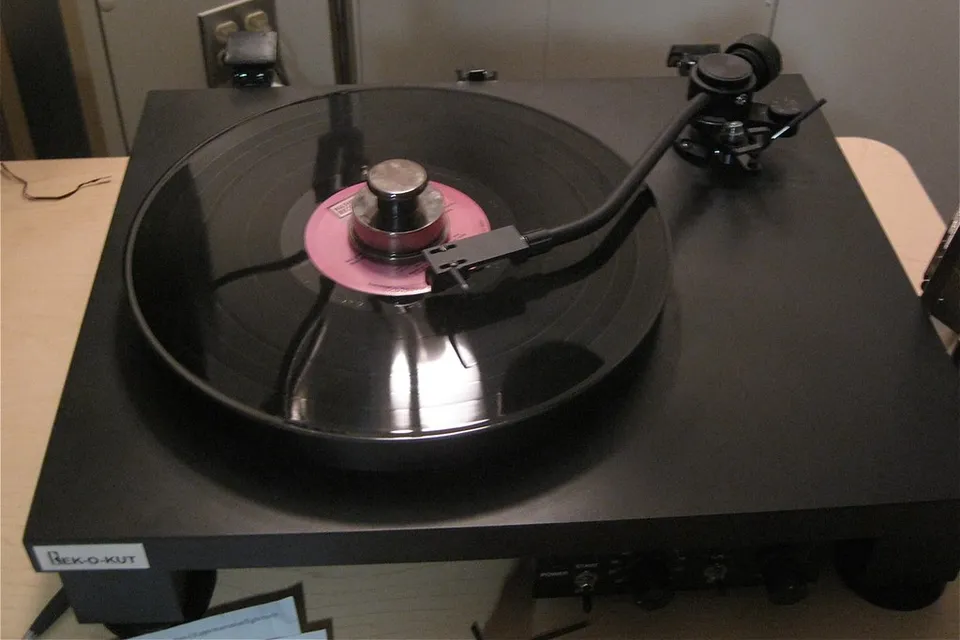 Tape & vinyl
Digitising vinyl records
Clean the disc, get the phono stage right, leave headroom, capture whole sides at 24 bits and repair clicks only on a copy.
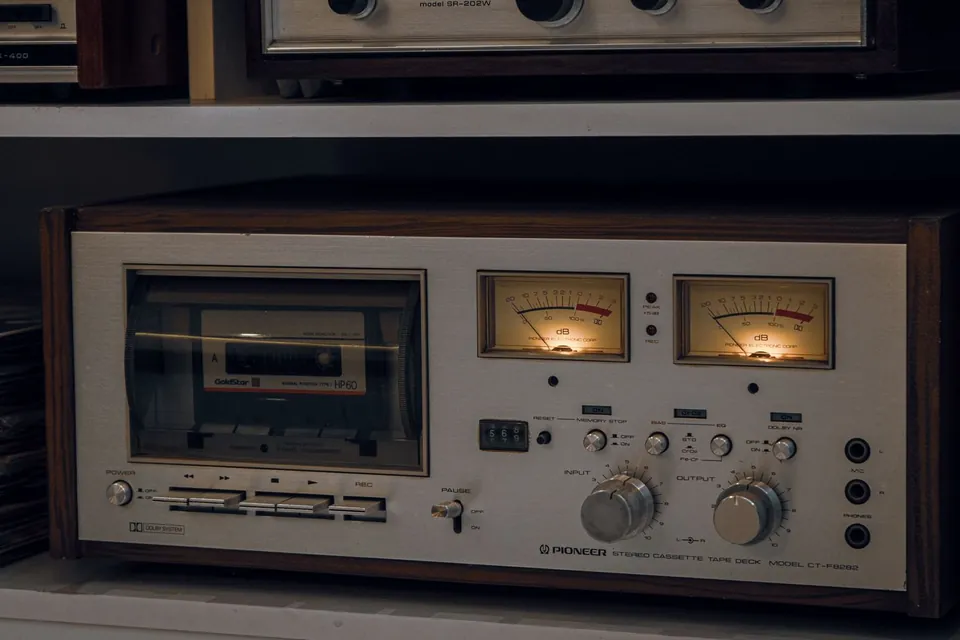
Buying a vintage cassette deck
Heads, capstans, tape types and Dolby: what the spec sheet means, and a five-minute test with your own cassette before you pay.

Buying used vintage hi-fi
Research the model, test what you can, budget for service, and know when to walk away.